

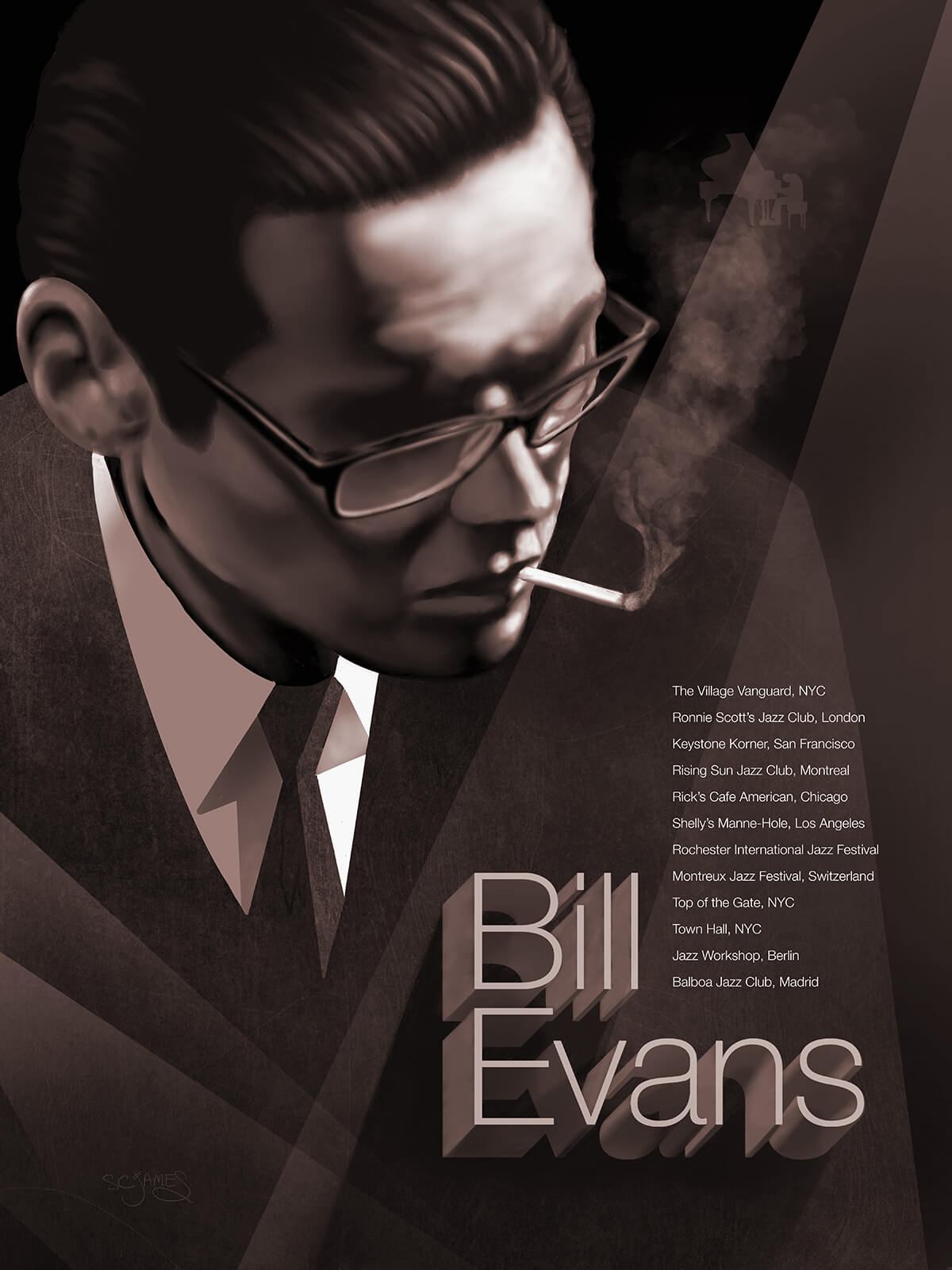
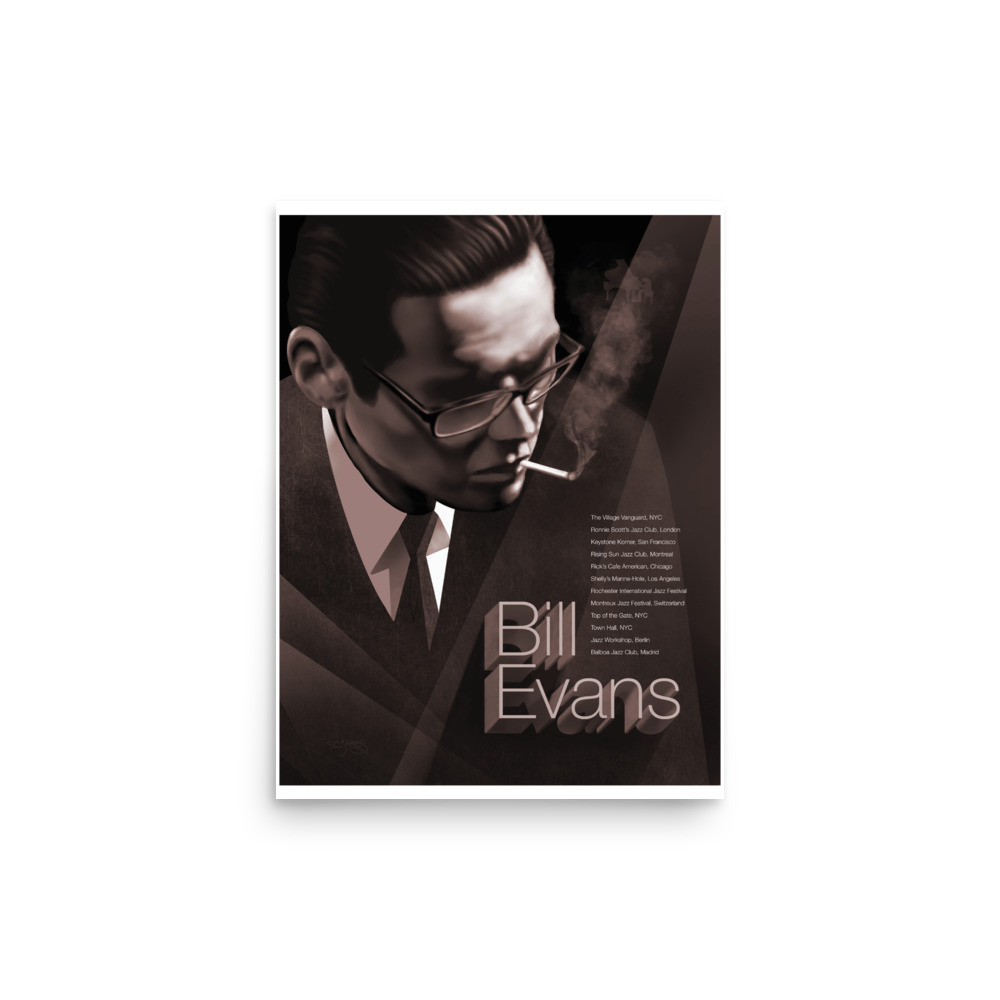
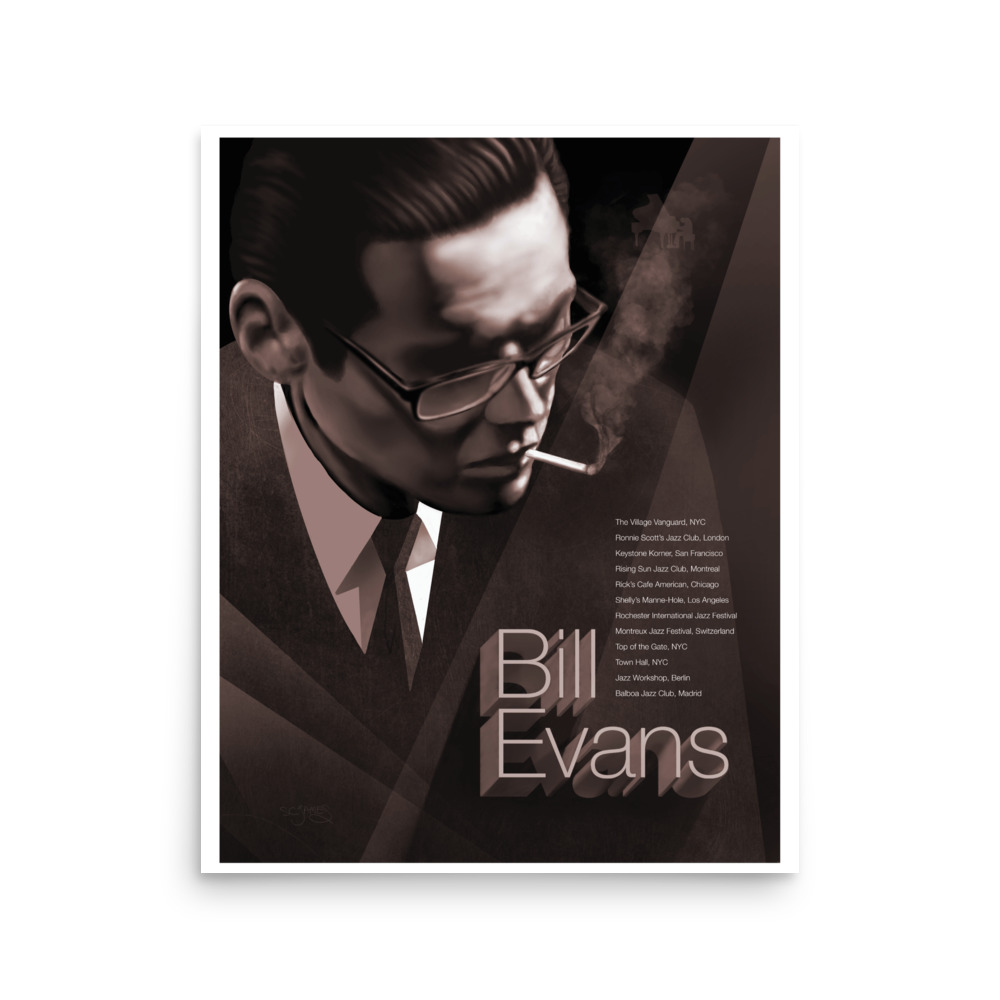
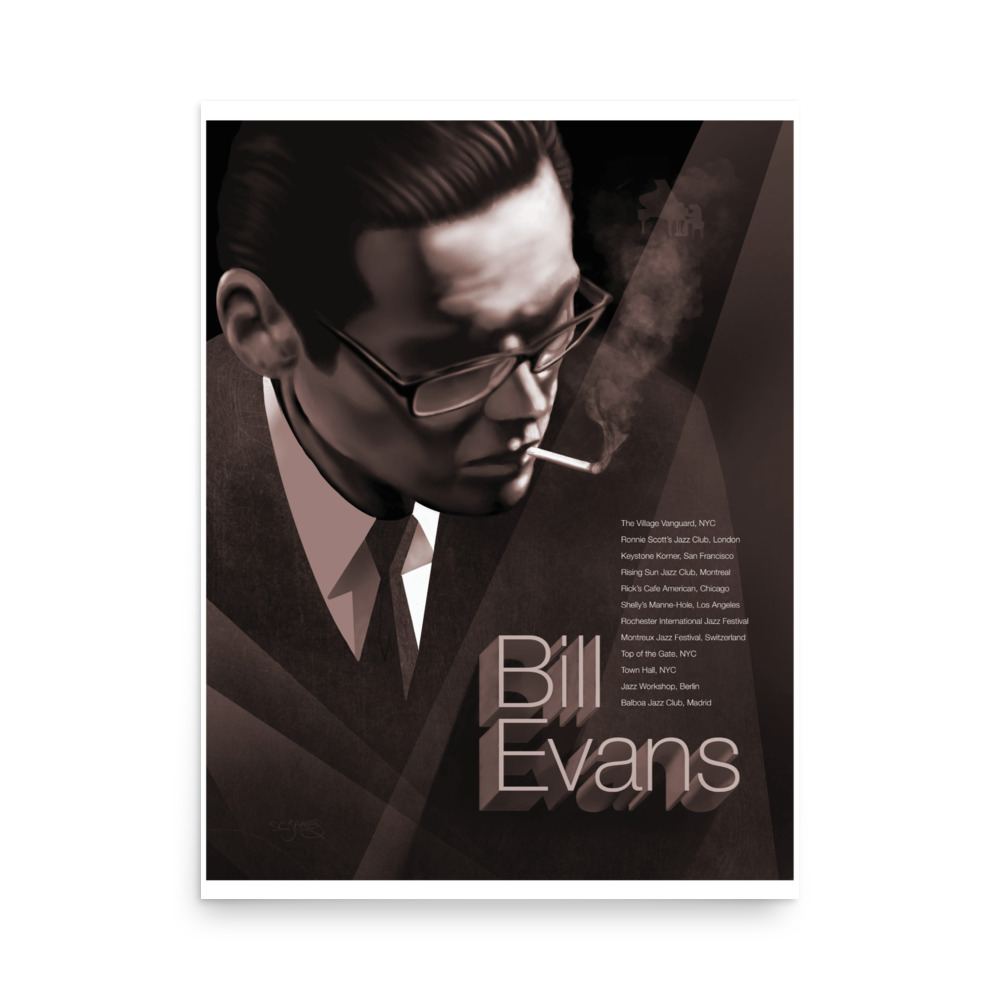
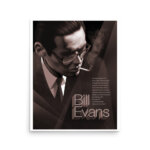
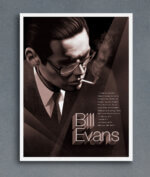
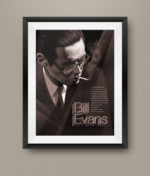
Bill Evans Vintage Poster
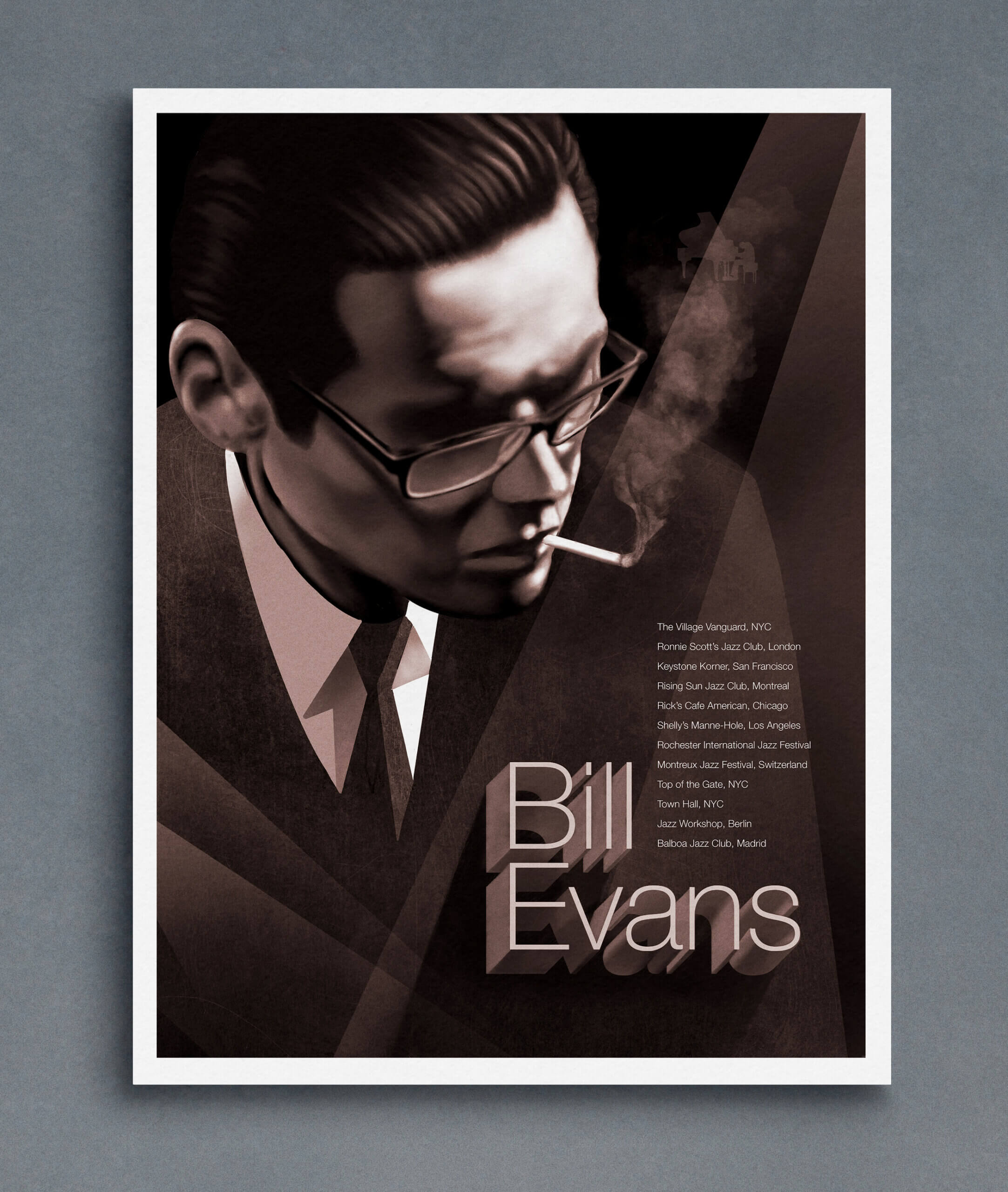
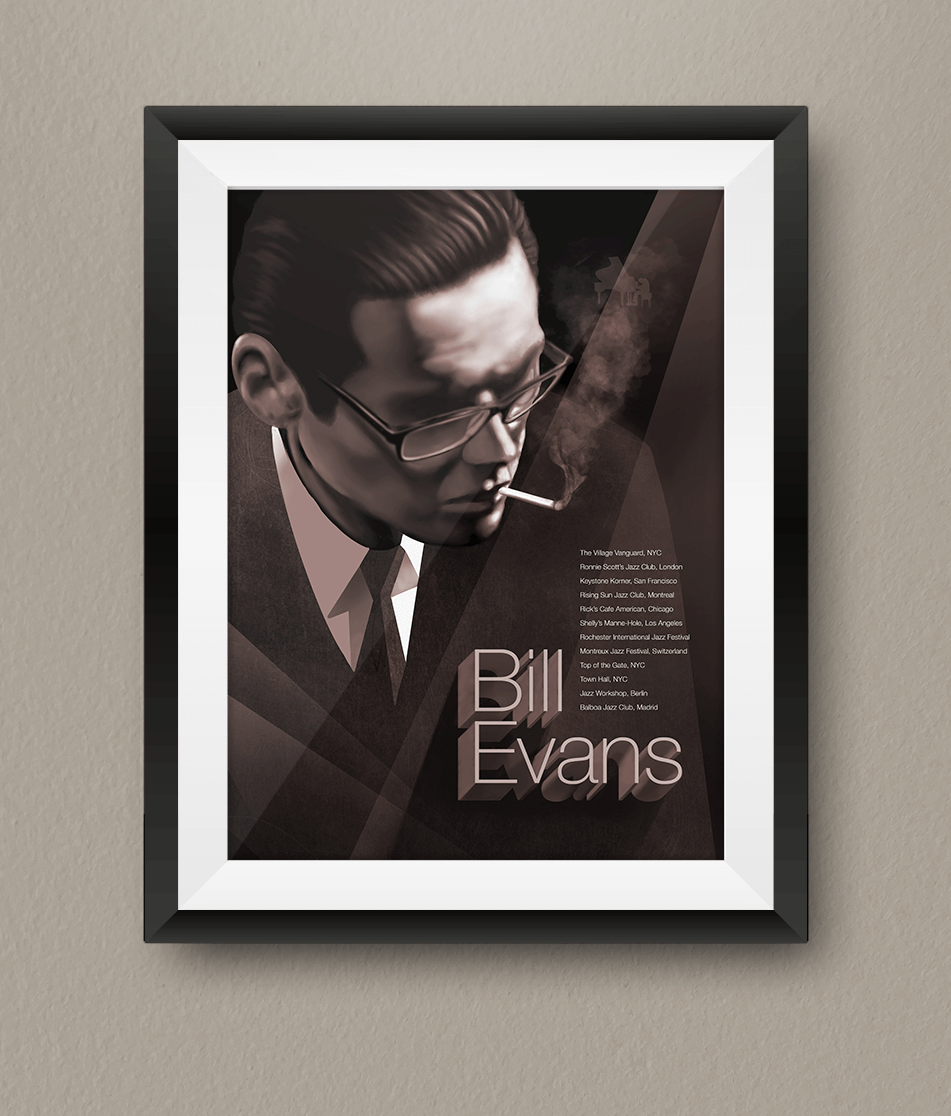
Bill Evans vintage Poster by S.Christopher James. Bill Evans (1929–1980) was one of the most influential jazz pianists in history, known for his deeply lyrical touch, rich harmonic language, and introspective style. Emerging in the late 1950s, he helped redefine jazz piano by blending classical impressionism with modern jazz harmony, creating a sound that was both delicate and emotionally complex. Evans rose to wider prominence as a member of Miles Davis’s Kind of Blue sextet, contributing significantly to the album’s modal approach, before leading his own groundbreaking trios that emphasized subtle interaction and equality among musicians. His playing was marked by shimmering voicings, sensitive phrasing, and a quiet intensity that continues to shape jazz pianists across generations.
Some of Bill Evans’s most notable and widely recognized compositions, many of which have become jazz standards:
Waltz for Debby – His most famous piece; tender, lyrical, and one of the defining jazz waltzes.
Peace Piece – A meditative, minimalist piano work that reveals his classical and impressionist influence.
Blue in Green – Co-credited with Miles Davis; haunting, modal, and one of the most recorded ballads in jazz.
Very Early – A beautifully crafted early composition showing his harmonic sophistication.
Turn Out the Stars – Lush, emotional, and frequently performed by later pianists.
Time Remembered – Dreamlike and harmonically advanced, often cited as one of his most personal works.
Peri’s Scope – More angular and modern, showing his rhythmic and compositional range.
We Will Meet Again – Written late in his life, deeply reflective and poignant.
Bill Evans didn’t just play the piano — he revealed it.
His music lived in the quiet spaces: between notes, inside unresolved chords, in the fragile beauty of restraint. Where others dazzled, Evans whispered. And in that whisper, he changed jazz forever. A central voice on Kind of Blue and the architect of the modern piano trio, Evans blended classical impressionism with jazz improvisation, creating a sound that felt more like memory than performance.
This print honors an artist who proved that subtlety can be revolutionary — and that the softest voices often echo the longest.
Price range: $24.50 through $36.50
Designed and illustrated by S.C. James is a archival museum-quality poster made on thick matte paper. Add a wonderful accent to your room and office with these posters that are sure to brighten any environment.
• Paper thickness: 10.3 mil
• Paper weight: 189 g/m²
• Opacity: 94%
• ISO brightness: 104%
• Paper is sourced from Japan
This product is made especially for you as soon as you place an order, which is why it takes us a bit longer to deliver it to you. Making products on demand instead of in bulk helps reduce overproduction, so thank you for making thoughtful purchasing decisions!
| Weight | N/A |
|---|