

Art Traveler
The Cabaret Card: How New York Kept Jazz Legends Off Its Stages
Nov
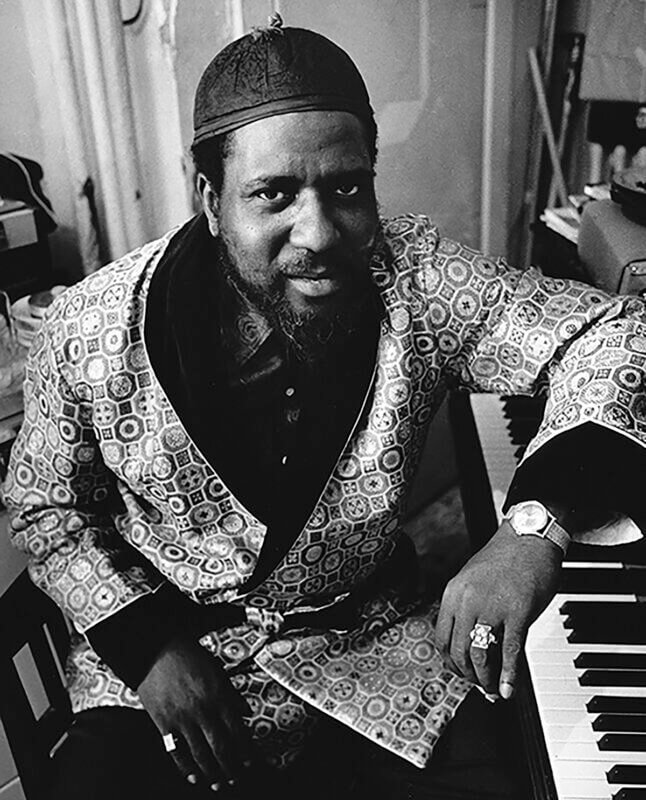
In the summer of 1951, Thelonious Monk was one of the most original composers in American music. He had already written “Round Midnight,” “Epistrophy” and “Blue Monk.” Within weeks, he could no longer legally play a club in his own city.
He hadn’t lost his talent or his audience. He had lost a small police-issued ID called the cabaret card. For the next six years, the man who helped invent bebop was shut out of the New York nightclubs where jazz lived.
Monk wasn’t alone. Charlie Parker, Billie Holiday and many lesser-known musicians had the same card taken away. This is the story of that card: how it worked, who it hurt, and how it finally fell.
A license to play, issued by the police
New York’s cabaret law dated to 1926, the Prohibition era, when the city began licensing nightclubs and limiting where people could dance. From 1940, the city went further: anyone who worked in a club that served liquor, from bartenders to bandleaders, had to carry a Cabaret Identification Card.
Getting one meant a trip to a police station to be fingerprinted, photographed and interviewed. The card had to be renewed every two years, and the fees reportedly went into the police pension fund.
The catch was what the police could do with it. An arrest record, even for a minor offense, could mean no card. A card already issued could be revoked with no trial and no formal hearing. No card meant no work in nearly every club in the city.
In practice, the system fell hardest on jazz musicians, and especially on Black jazz musicians. Narcotics arrests were the usual reason for revocation, at a time when federal and local police were aggressively targeting the jazz scene. Critic Nate Chinen, whose 2012 JazzTimes history is a key source on the subject, argues that by keeping major artists off the scene in jazz’s capital, the card disrupted not only careers but the development of the music itself.
Monk’s six silent years
On the evening of August 8, 1951, police approached a parked car near Monk’s apartment on West 63rd Street. Inside were Monk, his friend and fellow pianist Bud Powell, and several others. Officers found heroin, generally believed to be Powell’s. Monk refused to testify against his friend.
He served about 60 days in jail, and his cabaret card was taken away.
The popular version of the story says Monk nobly “took the rap” for Bud. Jazz historian Lewis Porter, drawing on Peter Pullman’s research for his biography of Powell, argues the record is more complicated than that legend. What isn’t in dispute is the loyalty: Monk wouldn’t name his friend, and he paid for it. Their bond went back years. Monk’s tune “In Walked Bud” is dedicated to Powell.
The cost was enormous. Monk was nearly unemployable in his own city. He played out of town, in cities without cabaret laws, and kept recording. Some of his greatest albums, including Brilliant Corners, come from this period. He met Baroness Pannonica “Nica” de Koenigswarter, the Rothschild heiress who became his patron and lifelong friend. But the clubs of New York, where reputations were made, were closed to him.
The road back began with his manager, Harry Colomby, a schoolteacher turned jazz manager. Colomby appealed to the State Liquor Authority, which by early 1957 said Monk first needed a club owner willing to hire him. Colomby found a small bar on the Bowery called the Five Spot Café.
In July 1957, Monk’s quartet opened there with John Coltrane on tenor saxophone. Coltrane had just kicked heroin; Monk had just won back the right to work. The run lasted months and became one of the most celebrated engagements in jazz history. Six years after losing his card, Monk was finally being recognized as the genius he had been all along.
Bird, Lady Day and the others
Billie Holiday lost her card after a 1947 drug conviction. She served about a year in federal prison, and even after her release the police refused to reinstate it. For more than a decade, one of the greatest singers in American history could not perform in a New York nightclub. She could still fill Carnegie Hall, which didn’t serve liquor. The Federal Bureau of Narcotics, under commissioner Harry Anslinger, pursued her for the rest of her life.
Charlie Parker lost his card in 1951 after a narcotics case. It meant Bird couldn’t legally play Birdland, the club named after him. He toured on his own and worked the few venues the law didn’t cover, like the Apollo. In a letter to the State Liquor Authority asking for his card back, he wrote that his “right to pursue my chosen profession has been taken away.” His wife Chan later recalled detectives offering to restore it if he would inform on others. The card came back in 1953. Parker died in 1955, at 34.
The list goes on: Chet Baker, J.J. Johnson, and many working musicians whose names never made the papers. For every legend who survived the ban, others simply left the business.
The comedian who broke the system
The card’s undoing came through a jazz-world comedian. Lord Buckley, a hipster monologist adored by musicians, had his card seized in 1960 over an arrest from 1941 that he hadn’t disclosed. Buckley said police told him he could get it back for a price. His case turned an open secret into front-page news.
Buckley died of a stroke that November, still without his card, and many blamed the strain of the fight. Outraged writers, musicians and friends formed a Citizens’ Emergency Committee and confronted the police at a public hearing. The scandal helped strip the police of control over the cards, which moved to the city’s Department of Licenses.
The cards themselves lasted a few more years. Under Mayor John Lindsay and his licensing commissioner, Joel Tyler, the City Council voted 35 to 1 to abolish them, and Lindsay signed the repeal on September 25, 1967. For Holiday and Parker, it came far too late. For Monk, it came a decade after his own fight was over.
The rest of the story
The club posters and marquees of the 1950s tell a glamorous story: Birdland, the Five Spot, names in lights. They don’t show the musician who couldn’t step inside, or the headliner who was booked in another city because a police clerk said no.
That gap is why I make the posters I make. When I drew Thelonious Monk, I wasn’t only drawing the man at the piano. I was thinking about the six years he spent locked out of his own city’s stages, and the loyalty that put him there.
The posters told part of the story. I draw the rest.
References
- Nate Chinen, “The Cabaret Card and Jazz,” JazzTimes, 2012. Key secondary source cited by the NPR and GRAMMY pieces below.
- “How The Police Used The Cabaret Card Law To Discriminate Against Black Jazz Artists And Musicians,” GRAMMY.com
- “Cabaret Cards: The Law Police Used To Keep Musicians Of Color Off Stage,” Jazz Night in America, WBGO / NPR, 2020
- “New York City Cabaret Card,” Wikipedia (cites the New York Times, September 13, 1967, on the Council’s 35–1 vote)
- Ben Houtman, “A brief history of New York City’s Cabaret Laws,” Allegro, Local 802 AFM, May 2016
- “Music Decriminalized: The End of ‘Cabaret Cards’,” WNYC / NYPR Archives
- “Show Me Your License, Daddy-O,” Reason, January 2013 (Parker’s letter and reinstatement)
- Lewis Porter, “Monk did not take the rap for Bud”, drawing on Peter Pullman, Wail: The Life of Bud Powell
- Robin D. G. Kelley, Thelonious Monk: The Life and Times of an American Original, Free Press, 2009
- “Misterioso (Thelonious Monk album),” Wikipedia (Colomby’s appeal to the State Liquor Authority, citing Kelley)
- “Five Spot Café,” Wikipedia
- “His Royal Hipness,” Eichler Network (Lord Buckley) and Maxwell T. Cohen, The Police Card Discord, Scarecrow Press
